


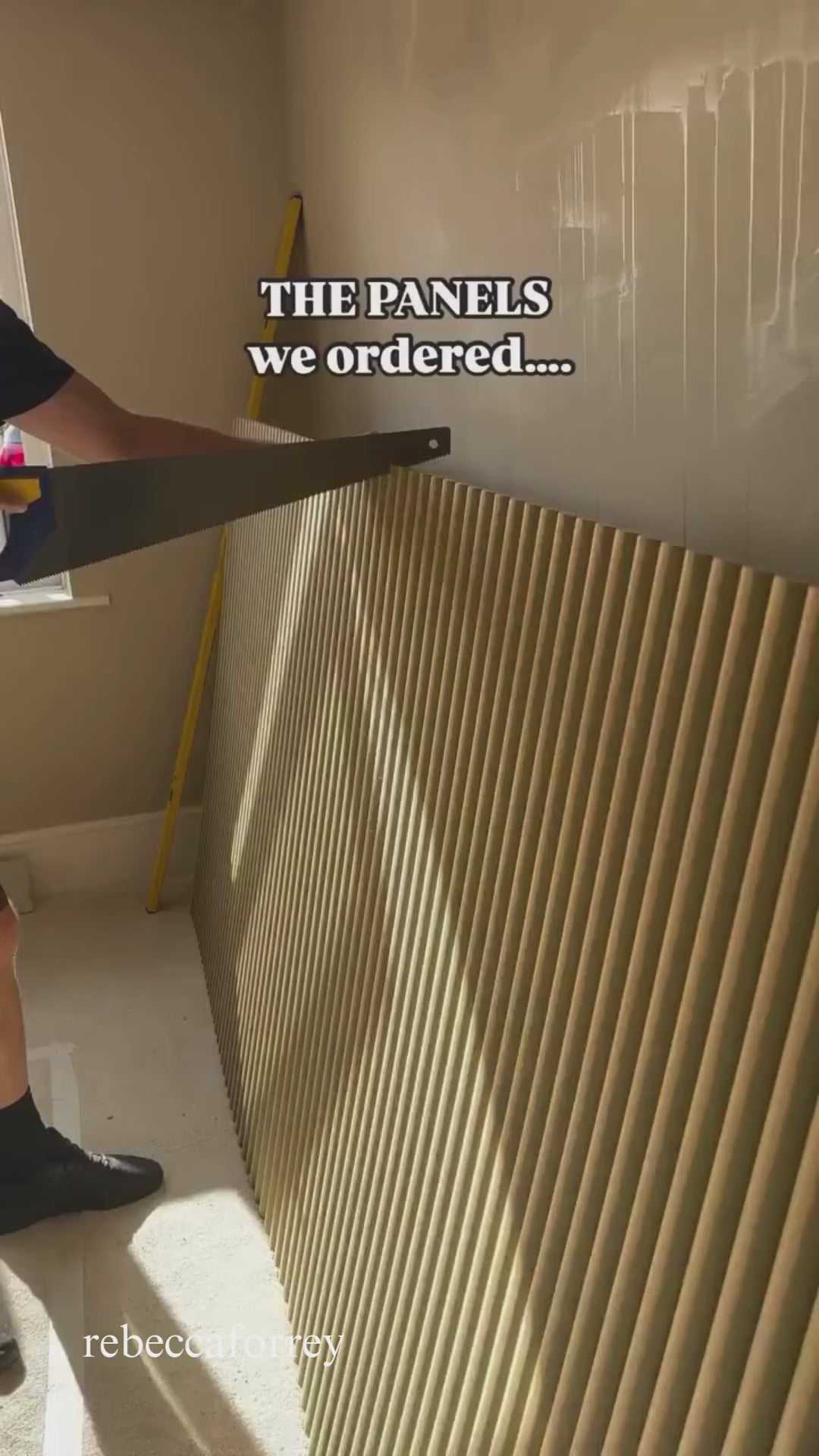
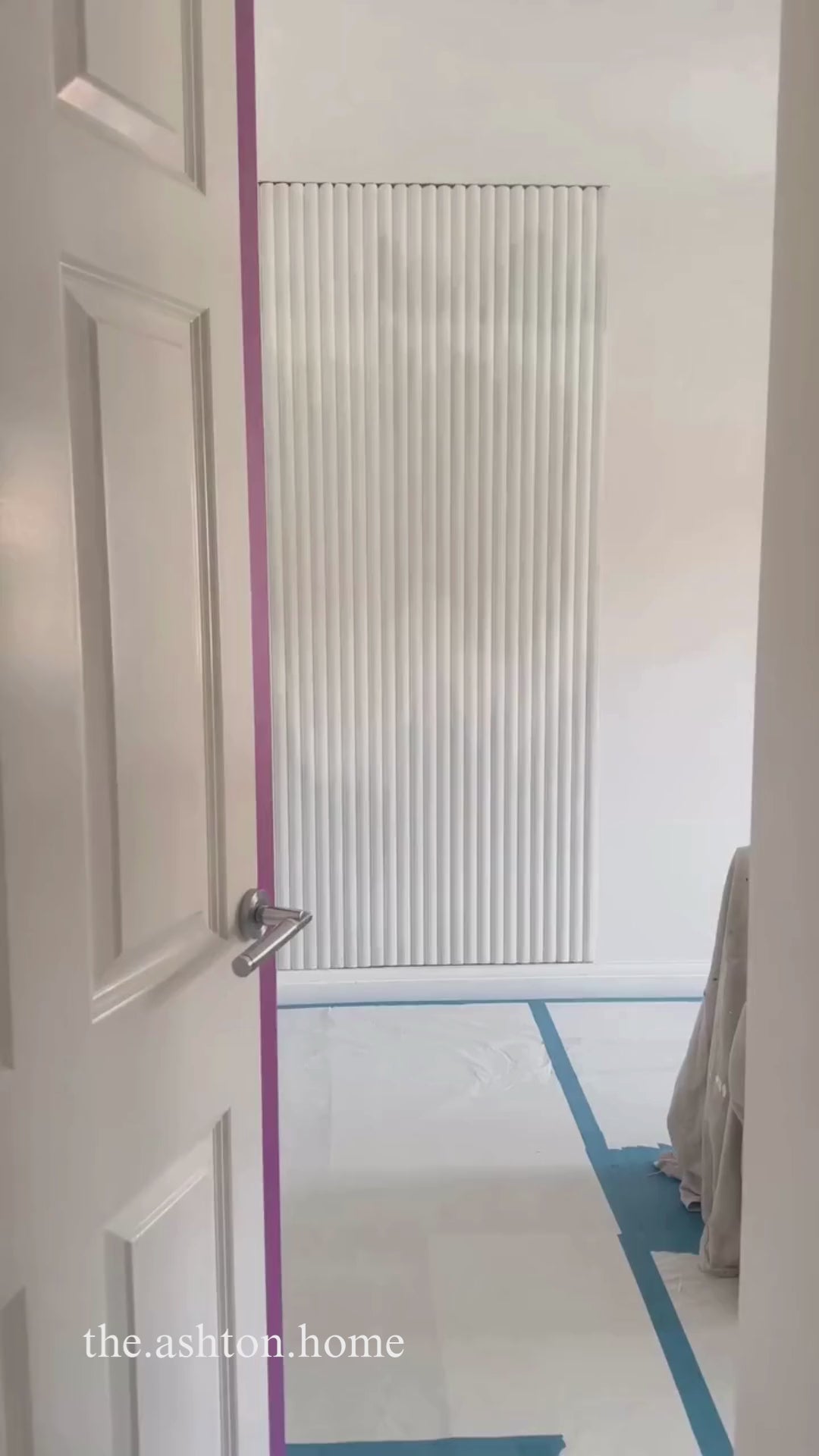



The panels look really good when up. Fairly easy to fit but I did have some issues with the recommended amount of adhesive. Needed a little more to get that “grab”. Very happy with the end result.
Ribbed Wall Panels
Ribbed Wall Panels
Extra 10% Off £300+ With
PANEL10
Ends:
Loading...
Regular price
£54.99
Regular price
£97.99
Sale price
£54.99
Unit price
per
Couldn't load pickup availability
Panelling a commercial space or near a heat source? Check out our Fire Rated Wall Panels for enhanced safety.
What Size Should I Order?
What Size Should I Order?
Choosing Size
Portrait (tall)
Use portrait when the panel needs to be taller than wide – e.g. floor-to-ceiling.
Landscape (wide)
Use landscape when the panel needs to be wider than tall – e.g. half-height walls, media walls, shelving.
Dimensions
All measurements are shown in millimetres (mm).
For half-height walls, we usually recommend around 1200mm high.
For exact finished sizes, choose Cut To Size so we cut to your exact mm.
Design direction
The panel pattern always runs vertically in both portrait and landscape.
To achieve horizontal lines, order portrait and install on its side.
Measuring Tips
- Walls are rarely perfectly straight - allow a few extra mm if needed
- Measure from the top of the skirting (not the floor)
- If there is coving, measure from the bottom of the coving
- Panels join seamlessly in almost all cases
- If joining two full-size sheets (2440×1220mm or 3050×1220mm) these may need a light trim for a perfect seamless join
The Design
The Design
Our Ribbed Wall Panels feature 37mm wide ribs with an 8mm depth, creating a bold, structured texture that adds modern architectural flair. The deep grooves create subtle shadow play, bringing walls to life throughout the day.
Perfect for living rooms, bedrooms, home offices, kitchens, and bathrooms, they balance style with function.
🤍✨ We love our ribbed wall panels for media walls! Perfect for framing your TV, enhancing built-in shelving, or creating a sleek statement feature, they add depth and texture to any living space. Their modern, minimalist design effortlessly complements any interior style, bringing warmth and sophistication to your home.
Please note: The profile shown reflects a new cutter. Over time, sharpening may slightly soften the shape, and machining may cause minor bowing.
Our Cut To Size Service
Our Cut To Size Service
Our Cut-to-Size Service ensures a perfect, custom fit for your project. Each panel is precisely cut, saving you time, effort, and the expense of hiring a professional.
Get your bespoke panels here: Cut-to-Size Wall Panels
Material
Material
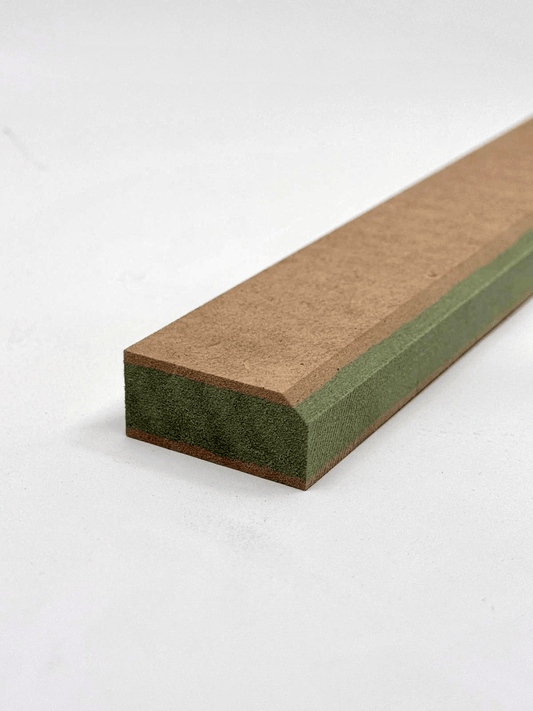
This wall panel is crafted from Finsa Hidrofugo MDF, a top-tier, moisture-resistant medium-density fiberboard that ensures exceptional durability. Expertly engineered, this MDF has a green core and is specially treated to endure humidity and moisture, making it an ideal choice for kitchens, bathrooms, and other moisture-prone areas.
Advantages of Finsa Hidrofugo MDF:
- Moisture-Resistant: Built to resist warping and swelling, even in high-humidity environments.
- Durable: Provides a strong and resilient base for your wall panels, ensuring long-lasting performance.
- Smooth Finish: Delivers a perfect surface for painting or laminating, enhancing the overall look.
- Eco-Friendly: Produced using sustainable materials, supporting green building initiatives.
How To Install
How To Install
Measure the Area:
Begin by measuring the space where you want to install your wall panels to ensure you have the right dimensions. Cut the panels as needed, or use our cut-to-size service for a perfect fit.
Prepare the Panels:
Lightly sand (if needed) then apply a primer to create a smooth, uniform base that enhances paint adhesion and provides a flawless finish.
Paint the Wall Panels:
Apply your chosen paint color to the panels, making sure it dries completely before moving on to installation.
Apply Adhesive and Position Panels:
Spread a suitable adhesive on the back of each panel. Carefully press the panel onto the prepared surface, securing it in place. Use tape or temporary supports to hold it steady while the adhesive sets.
Secure and Complete:
Once the adhesive has fully cured, remove any temporary supports and check that the panels are firmly attached.
Check out our full step-by-step installation guide here.


Featured In


Pair with a Top Trim
-
Dado Rail for Wall Panels
Regular price From £14.99Regular priceUnit price per -
Traditional-Modern Top Trim for Wall Panels
Regular price £19.99Regular priceUnit price per -
Classic Top Trim for Wall Panels
Regular price £19.99Regular priceUnit price per -
Gently Rounded Top Trim for Wall Panels
Regular price £19.99Regular priceUnit price per -
Traditional Top Trim for Wall Panels
Regular price £19.99Regular priceUnit price per

An Excellent Choice for Media Wall Panelling
Our ribbed wall panels are a great addition to modern media walls. They’ve become a firm favourite amongst influencers such as Rebecca Forrey, joiners and our customers, and provide a gorgeous backdrop to media wall shelving.
Check out our blogs on media wall panelling:
Frequently Asked Questions
Can ribbed wall panels be used in a bathroom or kitchen?
Yes, our ribbed wall panels are moisture-resistant so can be used in any room, including your bathroom or kitchen. If your panels are likely to be in direct contact with water, we recommend using waterproof ribbed panels.
Can ribbed wall panels be fitted next to a heat source?
If your panels are going to be in direct contact with a heat source such as a hob or electric fire, we recommend opting for our fire rated ribbed panels.
Why are the MDF ribbed panels green?
Our ribbed wall panels are made from Hidrofugo moisture-resistant MDF, which is known for its green core. While this core is exposed during machining, it does not impact the surface or painting process of the panels.
Do you offer ribbed samples?
Of course! We offer samples for all our wall panel designs and they are delivered for free within two working days. They're a perfect way to envision how our panelling will complement your space. View our ribbed sample here.
Do ribbed wall panels need painting?
Yes. They come unfinished, so need priming and painting to achieve your desired finished look. Check out our guide on how to paint wall panels here.
How do I fit ribbed panels?
Secure each panel to the wall using grab adhesive (and nails if needed), sanding lightly if necessary and sealing any gaps. Then, apply a coat of prime, followed by your chosen paint in thin, even layers, allowing each coat to dry fully before the next. See our full step by step installation guide here.
How do I miter ribbed panels?
To miter our ribbed MDF wall panels, you’ll need to cut the edges at a 45° angle, so they fit neatly together. The best tool for the job is a mitre saw, as it gives you clean, accurate cuts. You can also use a table saw with an adjustable blade angle, or a track saw if you're working with longer panels. Once cut, use clamps and wood glue to secure the joints, and lightly sand the edges for a smooth, professional look.
Customer Reviews
Overall rating: 4.9 / 5 from 62 reviews.
Communicate No order No refund No updates
Quick delivery. Only had a peak so far the removation is taking longer than expected. Good quality, cant wait to oaint them

Love the soft ribbed panels. They were easy to install in the kitchen as backsplash and communication throughout was excellent. Would definitely recommend this company
Superb panels, very good quality not cheap thin ones . A*****
Fast delivery and great quality product.
Wow! They look incredible. Very happy with my purchase
Ordering and delivery process was good. Lovely panels too
So happy with the ribbed panelling. Looks beautiful in my living room
Good quality panels. The delivery driver was a bit difficult but happy overall
Delivery took longer than expected but was well commuicated. Great customer service.
Would recommend
Great to deal with, good service and love the product!
Panels arrived a couple of days late but was really pleased with the quality!
Second time using this company. Very impressed with the panels, good customer service to
Fantastic experience overall. Great communication, quick turnaround and lovely quality products.
Smooth ordering process from start to finish. Delivery updates were clear and the panels arrived in perfect condition.
Look fantastic! Very easy to cut and fit to the wall.
Absolutely love the finished result of my panels. Have used them for my media wall and in my hallway
Panels arrived exactly when expected and were packaged really well. Customer service was also quick to reply to my questions.
We absolutely love these panels! Great quality and a good price
Very nice
Just brillaint, has transformed my room. Cannot stop looking at them
Look great
Really impressed. Look great in our kitchen.
Everything arrived cut accurately and ready to go. Made creating our media wall so much simpler.
Lovely panels - would recommend to friends.
Happy customer
Easy to order, and quick and we'll packed delivery
Great company
Excellent service - quality product
Would recommend
Fantastic, easy to fit.... i will be making another order !
Perfect, arrived quickly, well packaged and just what I ordered, very happy
So happy with my panelling!
Excellent quality panels and very professional service.
Panels arrived slightly late but pleased with them
So happy with how our media wall turned out.
impressed with the packaging and overall service. Everything arrived safely and the panels fitted perfectly.
The quality is brilliant and they were easy to work with. You can tell they誶e much better than cheaper alternatives online.